Most expensive home repairs start as small, slow problems: a blocked gutter, a dripping seal, a boiler that hasn’t been looked at in years. A little attention each season catches them early. This guide lists the jobs that matter most. Not every one applies to every home, and gas, electrical and roof work should be left to qualified professionals.
Southern hemisphere? The seasons are reversed. Spring runs roughly September to November, and autumn March to May. Our maintenance checklist adjusts the months automatically.
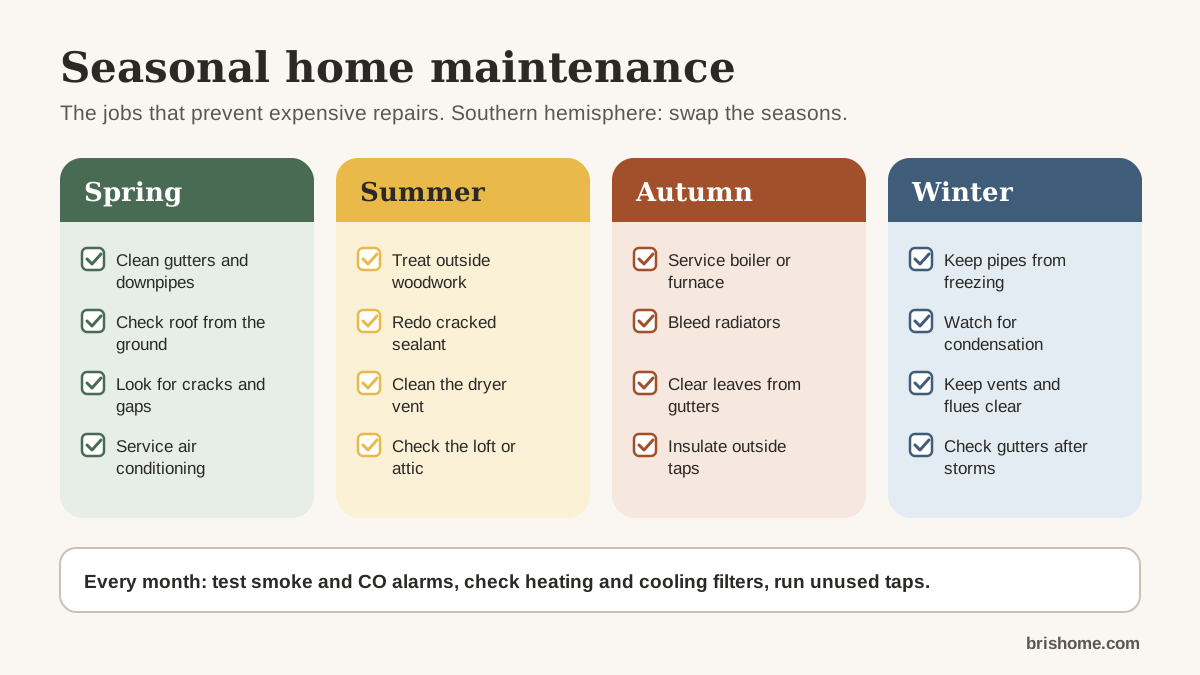
Every month
- Test smoke and carbon monoxide alarms with the test button. Replace batteries as the maker recommends, and replace the alarm itself at the end of its stated life.
- Check heating and cooling filters. Many need cleaning or changing every one to three months, more often with pets.
- Run water in rarely used taps and showers to keep traps full and water fresh.
- Clean the kitchen extractor filter, or check whether it’s due.
Spring
- Clean gutters and downpipes after the winter, and check that water runs away from the walls.
- Look over the roof from the ground with binoculars for missing or slipped tiles or shingles.
- Check outside walls, render and paint for cracks, and window and door seals for gaps.
- Service the air conditioning before the hot weather, if you have it.
- Clear drains and gullies of leaves and debris.
- Check outside taps and hoses for frost damage when the cold has passed.
Summer
- Repaint or treat outside woodwork while it’s dry: fences, decking, window frames.
- Check sealant around baths, showers and sinks, and redo it where it’s cracked or mouldy.
- Clean the tumble dryer vent and duct, not just the lint filter. Lint build-up is a fire risk.
- Trim plants away from walls, roofs and gutters.
- Check the loft or attic for signs of leaks, pests or damp while it’s light and warm.
Autumn
- Service the boiler or furnace before you need it. Most makers recommend a yearly service by a qualified engineer.
- Bleed radiators if the tops are cold when the heating is on.
- Clean gutters again once most of the leaves have fallen.
- Sweep the chimney if you use an open fire or wood burner.
- Insulate outside taps and exposed pipes before the first frost, and know where your stopcock or main water shut-off is.
- Check weatherstripping on doors and windows to keep heat in.
Winter
- Keep the home heated enough to stop pipes freezing, even when you are away.
- Watch for condensation and mould, especially on cold walls and windows. Ventilate kitchens and bathrooms after use.
- Clear snow and ice from paths, and keep vents and flues clear.
- Check the roof and gutters after storms.
Once a year, whatever the season
- Test and inspect safety devices: residual-current devices (RCDs/GFCIs) with their test buttons, and fire extinguishers’ gauges.
- Flush or check the water heater as the maker recommends.
- Check the condition of washing machine and dishwasher hoses.
- Review your home’s records: service dates, warranties and the contact details of trusted trades.
Make it a routine
The hardest part is remembering. Our free home maintenance checklist builds a month-by-month calendar for your home, including only the features you have, and you can add it to your phone’s calendar. For the weekly jobs, the cleaning schedule maker spreads the work across the days you have.
This guide is general information, not professional advice. Measurements, product instructions and local regulations come first.