A rug that is too small is the most common decorating mistake in a living room. It floats in the middle of the floor and makes the furniture look as if it is backing away from it. The fix is usually simple: go bigger than you think, and let the furniture sit on it.
The three rules that matter
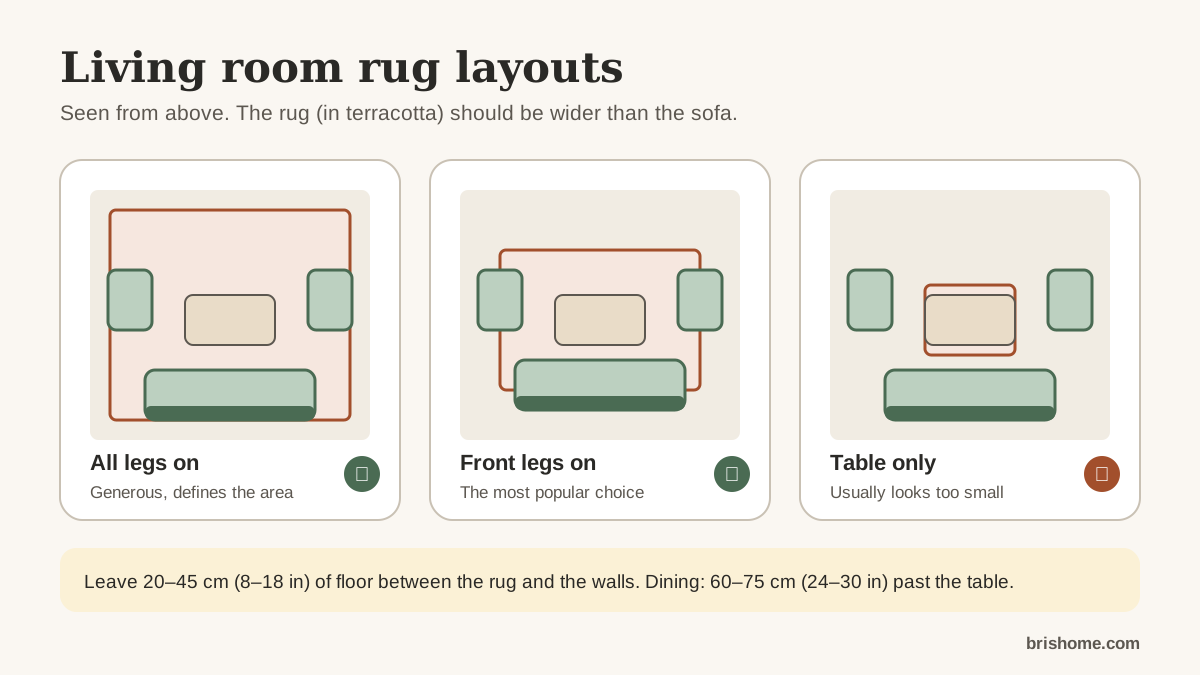
- Leave a border of floor around the rug. About 20–45 cm (8–18 in) between the rug and the walls looks intentional in most rooms. Smaller rooms suit the smaller end.
- Let furniture touch it. In a living room, at least the front legs of the sofa and chairs should sit on the rug, which ties the seating together.
- Match the shape of the area, not the room. A long sofa wants a rectangle; a round table often looks best on a round rug.
Our rug size planner applies these rules to your own room and shows the rug drawn to scale.
Living room
There are three common layouts.
- All legs on. The rug is big enough for every piece of seating to sit fully on it. This looks generous and works best in larger rooms or open-plan spaces where the rug defines the seating area.
- Front legs on. The sofa and chairs have their front legs on the rug and back legs on the floor. This is the most popular choice and works in most rooms.
- Coffee table only. The rug only sits under the coffee table. It can work in a very small room, but it usually looks too small.
As a rule of thumb, choose a rug at least as wide as your sofa, and ideally around 15–20 cm (6–8 in) wider on each side.
Dining room
Chairs get pulled out to sit down, and their back legs should stay on the rug when they do. That means the rug needs to extend about 60–75 cm (24–30 in) beyond the edges of the table on every side where there are chairs.
A table 180 × 90 cm therefore needs a rug of at least about 300 × 210 cm. A 72 × 36 in table needs one about 120 × 84 in (10 × 7 ft), so an 8 × 10 ft rug is a common choice.
Bedroom
Under a bed, the rug is mostly about what your feet land on in the morning. Common options:
- A large rug under the bed that extends about 45–60 cm (18–24 in) beyond the sides and foot of the bed. Usually it starts just in front of the bedside tables.
- Two runners, one along each side of the bed.
- A smaller rug at the foot of the bed, crossing its width.
Standard rug sizes
Shops in different countries sell different standard sizes. These are common ones:
| Metric (UK, Europe, Australia) | Feet (US, Canada) |
|---|---|
| 120 × 170 cm | 4 × 6 ft |
| 160 × 230 cm | 5 × 8 ft |
| 200 × 290 cm | 8 × 10 ft |
| 240 × 340 cm | 9 × 12 ft |
| 300 × 400 cm | 10 × 14 ft |
The sizes are not exact conversions. An 8 × 10 ft rug is about 244 × 305 cm, bigger than a 200 × 290 cm one, so check the real size on the label.
Before you buy
- Mark it out. Use painter’s tape on the floor at the size you are considering, and live with it for a day. It’s the quickest way to see whether a rug is too small.
- Check doors. A thick rug can catch an inward-opening door. Measure the gap under the door.
- Use an underlay. A non-slip rug pad stops rugs sliding and creeping, which matters for safety as well as looks.
- Plan the furniture first. It’s easier to choose a rug once the sofa and chairs are in place. Try them out on a room layout plan before you move anything heavy.
This guide is general information, not professional advice. Measurements, product instructions and local regulations come first.